
Punch the Monkey: The Problem With Zoo Animals Going Viral
People are too busy looking at a cute baby monkey; they aren’t paying attention to the concrete prison he’s in.

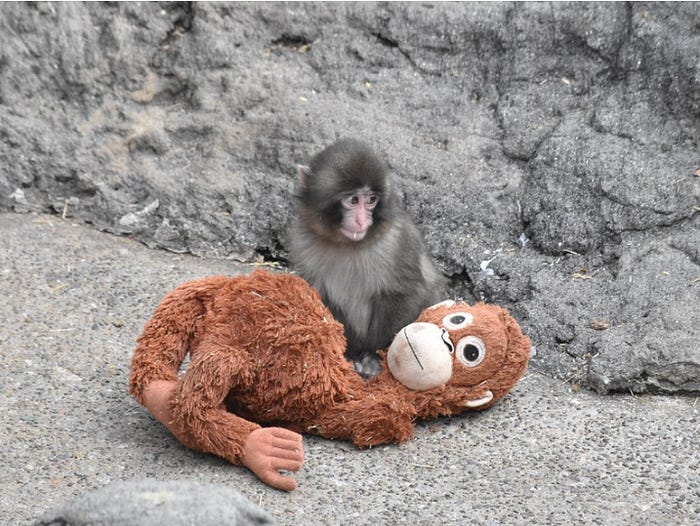
Another baby zoo animal has gone viral. This time, it’s a baby Japanese macaque named Punch, who is currently being held captive at the Ichikawa City Zoo in Japan. He was abandoned by his captive mother and raised by two zookeepers.
Videos of the baby macaque showing an attachment to a stuffed orangutan from IKEA went viral across various social media platforms in late February 2026.
International news outlets have picked up the story, and now millions of people around the world are talking about how cute Punch is and how sad it is that his mom abandoned him. Not enough people are talking about how sad it is for Punch and his fellow macaques to be trapped in a zoo for human entertainment in the first place.
Punch’s mother didn’t abandon him because she’s a mean monkey. She abandoned him due to stress and being a first-time mother.
A Guardian article titled “The tragedy of Punch the monkey: why do mother animals abandon their offspring?” reports that the zookeepers at the Ichikawa Zoo explained that Punch “was born during a heatwave, which would be a high-stress environment. In environments where survival is threatened from outside stress, mothers may prioritise their own health and future reproduction rather than continue to care for an infant whose health may be compromised by those environmental conditions.”
This is corroborated by a 2005 study called “Neonatal abandonment in Japanese macaques” which states that Japanese macaques are more likely to abandon their babies under “unfavorable conditions, and with proximate explanations linking abandonment to inexperience and stress.”
Even though the Ichikawa zookeepers blamed the heatwave as a source of stress for Punch’s mother, being kept in a sad enclosure with 56 other monkeys in a busy zoo had to be a factor as well.

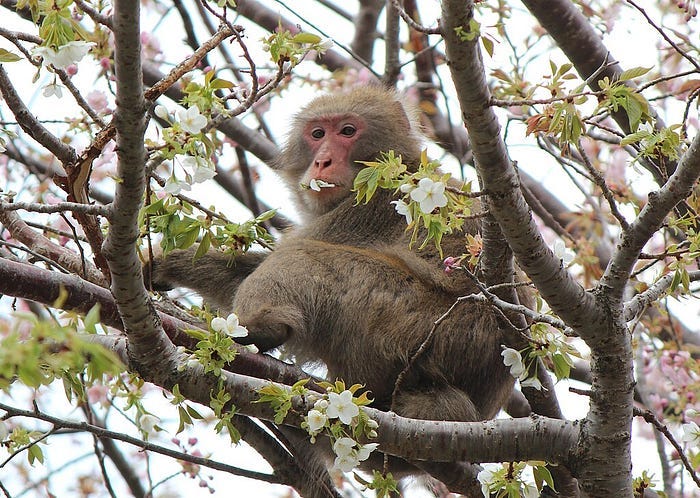
In the wild, Japanese macaques live in both subarctic and subtropical forests. They are diurnal animals, which means they are active early in the morning and spend their days foraging for food. At night, they look for a place to nest and go to sleep. They’re nomadic and have an entire forest to explore at their will.

Compare that to the depressing enclosure that Punch and his 55 cellmates have at the Ichikawa City Zoo, with not even a fake plant in sight.

I don’t see how anyone can look at that screenshot and think that’s cute and normal. Looking at that photo brings tears to my eyes, especially since I have observed macaques in the wild and know how much space and enrichment these intelligent creatures need.
Since I live in Thailand, the wild macaques that live here in Hua Hin are long-tailed macaques, so they’re not the exact same as the Japanese species, but they have a lot of similarities in their intelligence, behaviors, and complex social structures.
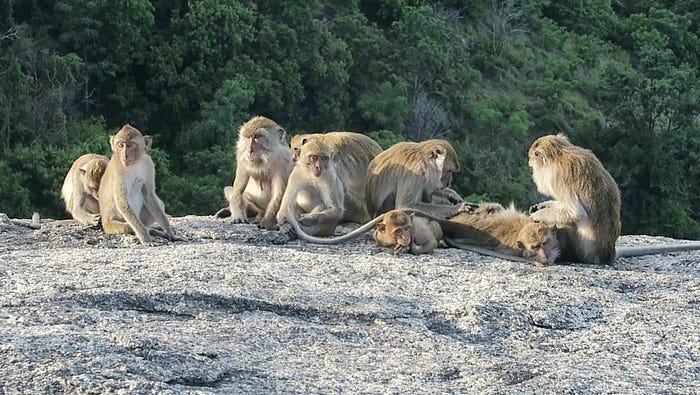
I wrote an article about my encounter with wild, long-tailed macaques, which you can read here.
Even the mountains of Hua Hin aren’t enough space for these intelligent animals. They still frequently come down to the city area in search of food. The distance from the Hua Hin Viewpoint, where the wild macaques live, to the city center is about 3.8 kilometers.
According to a species profile on the Animal Diversity Web, created by students from the University of Michigan, wild Japanese macaques are known to travel “up to 3.21 km a day during the month of August, whereas during winter months, they travel up to 5.02 km.”
Compare that space to Punch’s enclosure, which looks to be the same size as the swimming pool area in my condo.
Keeping 56 macaques in that small a space is torture and animal abuse. It should be common sense that wild animals who are used to a certain kind of habitat also need something as close to that as possible in captivity. But if you need proof, you can read this study from Kyoto University, which states:
“Behaviors associated with optimal living standards, such as playing and foraging were higher in the vegetated enclosure, while stereotypic and aggressive behaviors were significantly higher for monkeys living in the conventional nonnaturalistic enclosure.”
Given the dire conditions of her living situation and severe lack of enrichment, I’m not surprised Punch’s mother was stressed! Yet people are mad at her for abandoning Punch and not mad at the zoo itself.
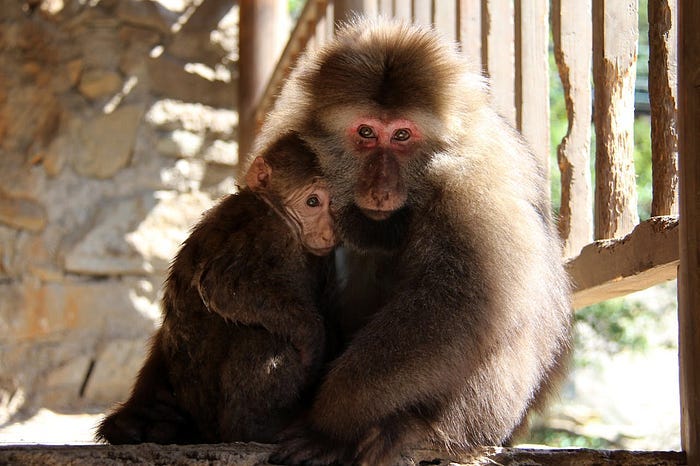
All Zoos Are Unethical
Zoos have been extremely successful in brainwashing people into believing that they need to exist for wildlife conservation efforts and to protect endangered species.
Not many people know about how zoos kill animals when they have bred too many of a certain species, or how even “good zoos” perpetuate wildlife trafficking.
Also, the wildlife conservation myth that too many people love to parrot when defending zoos is squashed when you realize that accredited zoos, on average, spend 3–5% of their total annual income on conservation, with one accredited zoo only spending 0.01%!
If half of the money that zoos made went to conservation instead, we might actually be able to save animals and their habitats.
Mention how zoos are animal prisons that only care about making money, and you will be met with a barrage of extremely defensive comments about how zoos have to exist, or else wild animals would go extinct and die.
The most annoying and ignorant argument in support of zoos is that the wild is dangerous for animals, so keeping them captive is better because they’re fed and taken care of.
Wild animals need much more than food and an enclosure. They need freedom. And if they can’t live in the wild, then they should be in a real sanctuary where they’re given sufficient space and enrichment.
Breeding wild animals or snatching them from the wild so that they can be gawked at by thousands of visitors a day is stressful for the animals. That is not better than being in the wild by any stretch of the imagination.
That’s why so many zoo animals develop zoochosis, which is when captive wild animals display repetitive and compulsive behaviors that they do not display in the wild.
These unnatural behaviors can include circling, pacing, excessive grooming, bar-biting, and self-harm. Animals have even developed eating disorders due to the stress of captivity.
It’s a common practice for zoos to drug wild animals since they can’t handle being forced to live in a shoebox for their entire lives.
When another zoo animal goes viral, I find it heartbreaking, not cute. Viral zoo animals perpetuate the exploitation of wild animals for entertainment and normalize keeping wild animals in unnatural, human-made enclosures instead of in the wild.
Everyone keeps focusing on the funny and relatable things the animal is doing in the videos, and not enough heat is put on the zoo industry for still existing.
Ethical Alternatives to Zoos
There are many organizations that exist to help wild animals without using them for entertainment. Real wildlife sanctuaries and wildlife conservation organizations rescue and help animals directly, and do not allow visitors to interact with wildlife in their care.
Since there are so many fake sanctuaries all over the world that pretend to help animals but are no better than zoos and other wild animal attractions, it’s best to only visit accredited sanctuaries or ones you have carefully vetted yourself.
The Global Federation of Animal Sanctuaries has a map of all its accredited sanctuaries with details and links to each location. My issue with GFAS is that many of the horse sanctuaries that they have approved still allow horseback riding, which is yet another form of animal abuse, so even some accredited sanctuaries aren’t completely ethical either, but at least they have been vetted in some way.
I think it’s worth noting that there are no accredited sanctuaries in Japan. The animal welfare laws there are quite weak, so wild animal abuse is rampant throughout the country, especially in animal cafes and the exotic pet industry, which are fueling wildlife trafficking.
To support real wildlife conservation efforts, there’s the Wildlife Conservation Network, which only lists NGOs that directly help wild animals. It’s also important to do your own research on these individual organizations and visit their center, if you can, to see their work with your own eyes. Unfortunately, there are so many organizations out there that pretend to help animals and the environment, but just line their own pockets.
Instead of engaging with videos of Punch the Monkey and whoever the next exploited viral baby zoo animal will be, engage with nature documentaries and videos from vetted sanctuaries and conservation organizations. Donate to them if you can.
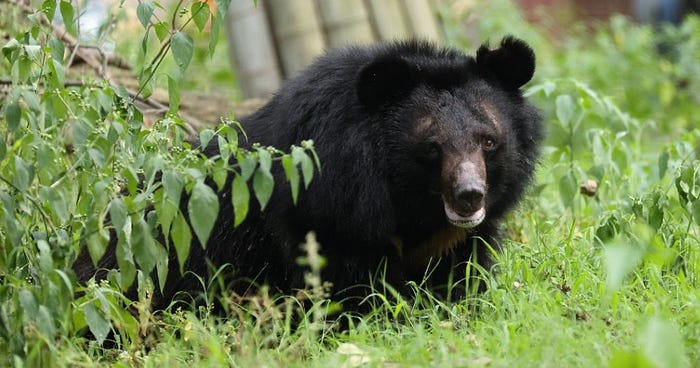
I personally support Animals Asia, which is an accredited sanctuary that has rescued many bears from the bear bile industry, helped make bear bile farming illegal in Vietnam, and continues to work hard to end bear bile farming in Asia. They also help cats, dogs, and elephants, and have had many successful campaigns to improve animal welfare in this region.
If you want to enjoy cute, ethical animal videos, check out their YouTube channel or Instagram.
Instead of going to a zoo and funding an unethical industry that should have been eradicated decades ago, visit a national park, or any natural area, and see wild animals where they belong: in the wild.
This article was originally posted on Medium.
Zoocheck.com 🔍